

Mission 89, European Parliament Convenes Urgent Dialogue on Child Trafficking as Thousands of Young Athletes Face Exploitation
High-level roundtable brings together EU policymakers, FIFA, and civil society to address trafficking schemes targeting vulnerable young athletes.
In a landmark gathering at the European Parliament, Mission 89 convened European policymakers, international sports bodies, and trafficking survivors to confront a crisis that affects thousands of young athletes each year: child trafficking in, through, and around sport.
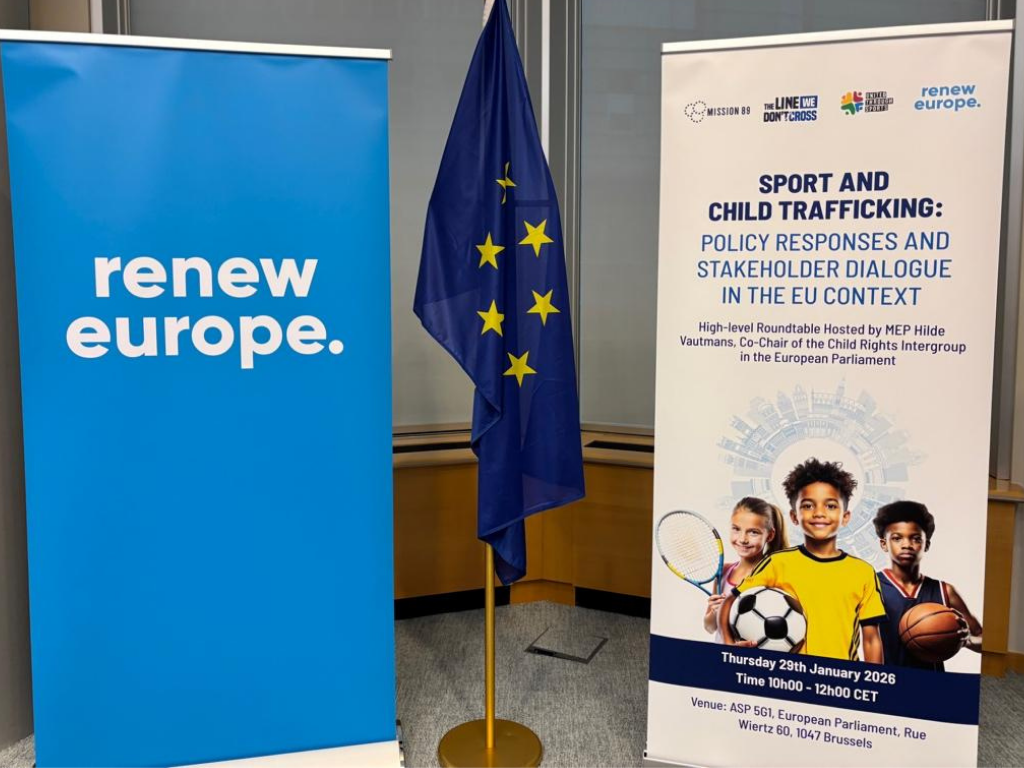
The high-level roundtable, “Sport and Child Trafficking: Policy Responses and Stakeholder Dialogue in the EU Context,” marked a critical turning point in how Europe addresses exploitation schemes that prey on children’s dreams of sporting success.
Hosted by MEP Hilde Vautmans, Vice-Chair of the Intergroup on Children’s Rights, and organised in partnership with United Through Sports, the event also brought together voices that have historically been absent from policy debates: athletes. The dialogue aimed to translate evidence, lived experience, and political responsibility into concrete, rights-based solutions.
Professional footballer Katriina Talaslahti spoke candidly about the vulnerabilities young athletes face when competing abroad, including language barriers that isolate them, complex contracts impossible to understand, and visa situations that create fear of speaking out. Young leaders from United Through Sports reinforced these lived experiences, ensuring that policy discussions remained grounded in the reality of those most at risk.
“Every year, thousands of young people chasing their sporting dreams fall victim to trafficking schemes,” said Lerina Bright, Executive Director of Mission 89. “We have the legal frameworks. We have the evidence. What we need now is the political will to implement protections that work, and that means sports federations, governments, and civil society working together, not in silos.”
The EU Policy Perspective:
During a keynote address, the EU’s anti-trafficking coordinator, Diane Schmitt, highlighted both the upcoming challenges and the existing resources available to tackle the issue. She noted that while the revised EU anti-trafficking framework has improved overall data collection, significant evidence gaps in sports still hinder effective, targeted interventions. To succeed, she stressed that any response must be grounded in solid evidence.
Schmitt emphasised that while the revised EU anti-trafficking framework has strengthened overall data collection, evidence gaps specific to sport continue to undermine targeted interventions. “We don’t need new laws,” Schmitt stated. “We need investment in what actually protects children: effective implementation, cross-border cooperation, financial investigations, and holding perpetrators accountable.”
Sports Governance Steps Up
Chaired and moderated by Laurent M.J. De Boeck, institutional perspectives focused on operational prevention and humanitarian engagement, whilst civil society voices looked at victim support and grassroots community-based initiatives.
Marie-Laure Lemineur, Head of Safeguarding and Child Protection at FIFA, outlined the dual responsibility of international sports federations: creating safer, more regulated environments to reduce risk, and establishing robust sanctioning mechanisms when violations occur.
FIFA’s licensed agent system serves as a critical safeguard, complemented by the Ethical Recruitment Guide for Football Agents, a 2024 publication developed in collaboration with Mission 89. Notably, sport carries its own sanctioning power, operating alongside state justice systems, giving the sector unique leverage to hold perpetrators accountable and deter future abuses.
From Dialogue to Action
Participants identified urgent priorities: strengthening data collection, improving victim identification practices, and integrating sport-specific indicators into national referral mechanisms. Critically, all stakeholders agreed that prevention must be transnational and require multi-stakeholder coordination.
The roundtable has initiated a formal stakeholder consultation process to refine the United Declaration, a global framework for combating trafficking in sport, ahead of its international launch.
“Dialogue means nothing without action,” Bright reminded attendees in her closing remarks. “The real test lies in whether today’s commitments translate into sustained, measurable change for vulnerable young athletes.”
Call to Action
Mission 89 calls on:
- Governments to integrate sport-specific trafficking indicators into national referral mechanisms and fund cross-border enforcement.
- Sports federations and clubs to implement robust safeguarding systems, transparent contracts, and athlete support mechanisms.
- Academies and agents to adopt ethical recruitment standards and provide accessible, multilingual information to young athletes.
- The international community should recognise sport-related trafficking as a priority within broader anti-trafficking frameworks.
Add Comment